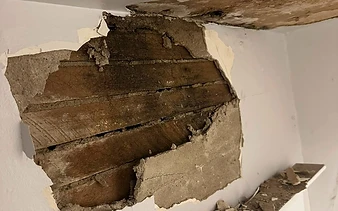
Here's a spring surprise a lot of Toronto homeowners get: you turn on the garden hose for the first time in April, and water starts dripping through the basement ceiling.
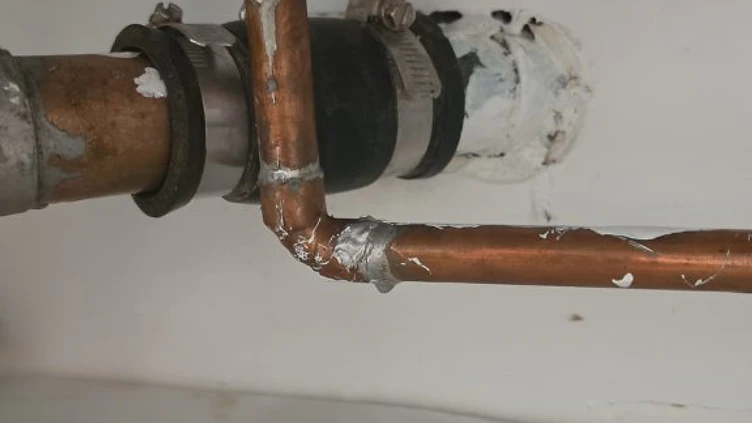
The pipe to the outdoor tap froze over the winter, split inside the wall, and nobody knew until the water came back on. It takes about ten minutes to prevent. Here's how to do it in a typical Toronto or GTA house.
When to do it
Before the first hard frost. In Toronto that can come any time from mid-October on, and one cold night is enough to freeze water sitting in an exposed pipe. If you're reading this in October, do it this weekend.
Step 1: Take the hose off
Disconnect the garden hose and drain it. This matters even if you have a "frost-free" tap. A hose left attached traps water in the tap, and that water can freeze and split the pipe.
Store the hose in the garage or shed. Hoses left outside all winter crack.
Step 2: Find the shut-off valve inside
Go to the basement and follow the pipe that runs to the outdoor tap. It's usually on the same wall as the tap, often in an unfinished laundry or furnace room. In a finished basement it may be behind a ceiling tile or an access panel.
You're looking for one of two things:
- A small round handle (gate valve). Common in older houses.
- A lever handle (ball valve). Common on newer plumbing. A quarter turn closes it.
Many of these valves also have a small brass cap on the side. That's the bleeder, and you'll use it in a minute.
Can't find a shut-off at all? Some houses never had one put in for the outdoor tap. More on that below.
Step 3: Close the valve
Turn the round handle clockwise until it stops, or turn the lever so it sits across the pipe.
If the handle won't budge, stop. Old gate valves seize, and forcing one with a wrench can snap the stem or start a leak you can't shut off. That's a good time to call us.
Step 4: Drain the line
Go outside and open the outdoor tap all the way. A little water will run out, then stop.
Back inside, put a small bucket or towel under the bleeder cap and unscrew it. More water will come out. That's the trapped water you're trying to get rid of. When it stops, screw the cap back on.
Leave the outdoor tap open for the winter. If any water is left in the line, it has room to expand instead of splitting the pipe.
If you have a frost-free tap
A frost-free tap (often called a frost-free sillcock) has a long body that reaches inside the warm wall, so the actual valve sits indoors. From the basement, you'll see a long section of tap body before it connects to the regular pipe.
You still need to take the hose off. Closing the inside shut-off as well is extra protection and doesn't hurt.
Taps in garages and cold rooms
If the pipe to your outdoor tap runs through an unheated garage or a cold room, it's at higher risk. Foam pipe insulation from the hardware store helps, and so does an insulated cover over the outdoor tap. Neither one replaces shutting the water off.
Townhouses and condos
In many townhouse condos, outdoor taps are controlled by the condo corporation, not individual owners. Check with your property manager before you start hunting for valves. If the tap is yours to manage, the steps above apply.
No shut-off, or a valve that leaks
Some older houses have an outdoor tap with no separate shut-off. Your only way to drain it is to shut off the main water each time, which isn't practical. Having a shut-off valve added on the line inside is a small job, and it makes winterizing simple every year after.
Call us if:
- The shut-off valve won't turn or drips when you close it
- There's no shut-off for the outdoor tap
- You found a split pipe or a water stain from last winter
- The outdoor tap drips even when it's closed
These are all part of our plumbing repairs, which include shut-off valve and supply line repair.
If a pipe has already burst
Shut off the main water valve right away. In most Toronto houses it's in the basement where the water line comes in, often on the front wall. Then call our emergency repair line. If you're not sure whether something counts as an emergency, read when a home repair is actually an emergency. For other cold-weather plumbing headaches, see common plumbing problems in Toronto homes.
We work across Toronto and the GTA, including Etobicoke, North York, Scarborough, Mississauga and Vaughan.
Valve stuck, or no shut-off at all? Call or text 416Fix at (365) 360-1416 and tell us what you're seeing. A photo of the pipe and valve helps.